
“Fashion demands innovation” and one of the easiest ways of accessing this is by looking into “other cultures for the novel and exotic” (Ann Marie Leshkowich, “What Happens When Asian Chic Becomes Chic in Asia?” 2003, page 282). It emphasizes the difference or “otherness” between Eastern and Western cultures. Therefore, the “Asian style” becomes something desirable to the North American and European eye because of its exoticism.
“Capital is universal, it does no discriminate, the world is its oyster, it will incorporate any local taste and offer it to the world through the frame of late capitalist globalized market economy, so long as it sells” (Leshkowich, 14). In summary, this means that designers and consumers play a big part in the continuation of these practices. While these practices have potential to harm certain ethnic and cultural groups they can also bring about the importance of multiculturalism.
The practice of “Asian Chic”can have negative consequences on the meaning of the traditional clothing. For instance, it may devalue the significance of the garment, lead to an erasure of a culture’s traditions by making it a common form of dress, or promote Orientalism, fetishization and dehumanization of a group of people. At the same time, if done right, it could form bridges between cultures and encourage multiculturalism. If the latter were to happen, there would need to be some inclusion of people from that cultural group being represented in order to maintain authenticity.

On June 24, 2015 the Museum of Fine Arts (MFA) was involved in a controversy regarding Claude Monet’s 1876 La Japonaise painting. The nineteenth-century portrait portrays an image of Claude Monet’s wife, Camille, in a red Japanese kimono with a red, white and blue fan and wearing a blonde wig to “emphasize her Western identity” (Michelle Liu Carriger “No ‘Thing to Wear’: A Brief History of Kimono and Inappropriation from Japonisme to Kimono Protests” 2015, page 165). There was also a replica of the kimono from the painting that visitors could try on. As a result, protesters claimed this was cultural appropriation, “orientalism, exotification and racism” (166). Counter protesters argued that this was a form of cultural appropriation because it introduced Japanese culture to non-Japanese people through a playful and interactive way.
When non-Asian artists and designers profit off of culturally Asian objects, it can lead to serious consequences and mixed responses. For instance, it could lead to an erasure of cultures and the significance and history of traditional items. It also can also potentially present those cultural groups as exotic and inferior. At the same time it can encourage the beauty of diversity and multiculturalism. All in all, the divide between cultural appropriation and appreciation is quite difficult to distinguish. However, there is one way to differentiate the two: who is benefiting from the exposure and who’s being exploited? The one profiting from the exposure but doesn’t belong to the specific cultural group while those in the cultural group are suffering would be participating in cultural appropriation.


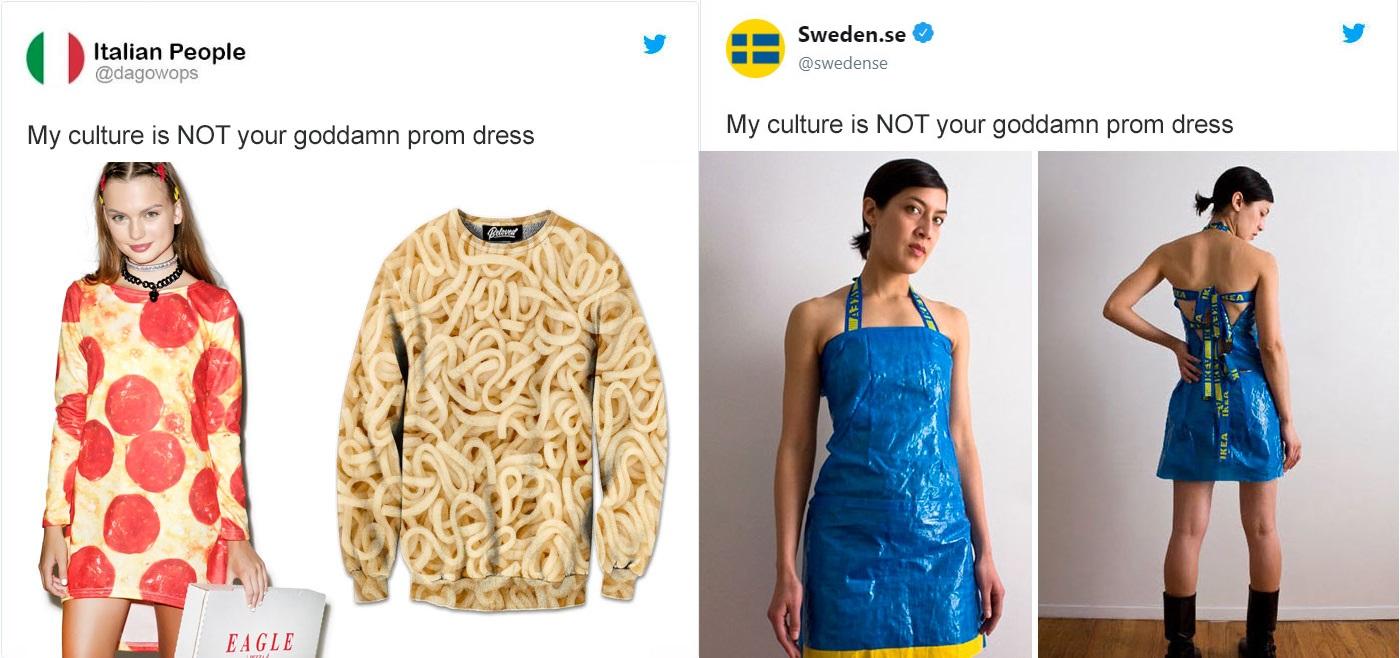


 Cultural Appropriation of East Asian Traditional Clothing